




Key Fragrance Trends Shaping India’s Perfume Industry
Discover the key fragrance trends shaping India's perfume industry, from complex fragrance structures and climate-specific formulations to microencapsulation technology and Make in India innovation. Explore how Indian fragrance brands are advancing through research, sustainability, and technical excellence to compete with global perfume houses and meet evolving consumer expectations.
The Rise of Sophisticated, Sustainable, and Proudly Indian Fragrances
The fragrance industry in India is undergoing a remarkable transformation. Today’s consumers are becoming increasingly aware of what goes into the products they use, how long a fragrance lasts, and whether a brand aligns with their values. As a result, fragrance trends in India are no longer solely driven by pleasant aromas. They are being shaped by factors such as sustainability, value for money, product performance, and the growing preference for high-quality Indian brands.
The modern Indian consumer wants fragrances that offer a premium sensory experience while remaining practical for the country’s diverse climatic conditions. At the same time, the Make in India movement has encouraged domestic fragrance manufacturers to strengthen their research, innovation, and production capabilities.
As the industry evolves, several key trends are influencing the future of fragrance development in India. Let’s talk about them in detail!
Trend 1: The Growing Preference for Complex Fragrance Structures
One of the most prominent developments in modern perfumery is the increasing demand for sophisticated and complex fragrance structures. Consumers today seek fragrances that evolve throughout the day rather than remaining linear from application to dry down.
To achieve this, fragrance creators are focusing on advanced molecular compositions and carefully selected aroma compounds that contribute to a richer olfactory experience. These complex fragrance structures allow different notes to unfold gradually, creating depth, character, and uniqueness.
The emphasis is no longer only on how a fragrance smells initially. Instead, brands are investing in formulations that offer a complete fragrance journey, where top notes, heart notes, and base notes interact harmoniously over time. This trend reflects the growing maturity of the Indian fragrance market and the consumer’s desire for more refined and luxurious scent experiences.
Trend 2: Ingredient Chemistry is Becoming More Important Than Ever
As fragrance structures become more sophisticated, ingredient chemistry is playing an increasingly important role in product development.
Manufacturers are investing considerable effort into understanding how different fragrance ingredients interact with one another. The objective is not only to create appealing scent profiles but also to ensure stability, consistency, and longevity. Certain aroma molecules complement and strengthen each other, while others may reduce performance if not carefully balanced.
Modern fragrance development therefore relies heavily on scientific research, ingredient compatibility studies, and formulation expertise. By experimenting and building iterations of how fragrance compounds behave individually and collectively, manufacturers can create products that deliver superior performance and maintain their character throughout their lifespan.
Trend 3: Long-Lasting Fragrances Designed for India’s Climate
India presents a unique challenge for fragrance manufacturers due to its climatic diversity. High temperatures, humidity, and seasonal variations can significantly impact fragrance performance on the skin.
As a result, longevity has become one of the most important factors influencing purchasing decisions. Consumers increasingly expect fragrances that remain noticeable throughout the day, even in challenging weather conditions.
To address this demand, fragrance developers are conducting extensive research into climate-specific formulation strategies. The focus is on selecting ingredients and molecular combinations that perform effectively under Indian environmental conditions while maintaining their intended scent profile.
By developing fragrances that are better suited to the Indian climate, manufacturers can deliver enhanced user satisfaction and create products that feel more relevant to local consumers needs. This climate-conscious approach is expected to remain a major area of innovation within the industry.
Trend 4: The Rise of Pro-Fragrances and Microencapsulation Technology
Technological innovation is playing a significant role in the future of fragrance creation. One of the most exciting developments is the growing adoption of microencapsulation technology.
Microencapsulation involves enclosing fragrance molecules within microscopic protective capsules. These capsules gradually release fragrance over time when exposed to factors such as movement, friction, temperature, or moisture.
This controlled-release mechanism offers several advantages. It helps preserve fragrance integrity, improves longevity, and enables a more gradual fragrance evolution throughout the day. Instead of a strong initial burst followed by rapid fading, consumers experience a more consistent and long-lasting scent performance.
The technology is increasingly being incorporated into personal care products, home care applications, fabric care solutions, and fine fragrances. As consumer demand for long-lasting products continues to grow, microencapsulation is expected to become an important tool in fragrance innovation.
Trend 5: Indian Fragrance Brands are Stepping Up to Global Standards
The Make in India initiative has provided significant momentum to the domestic fragrance and flavour industry. Indian manufacturers are increasingly investing in research and development, advanced laboratories, technical infrastructure, and modern production facilities.
This commitment to innovation is enabling Indian companies to align with evolving international standards while developing products that reflect local preferences and cultural identity.
Today’s Indian fragrance brands are no longer focused solely on affordability. They are working to deliver sophisticated formulations, improved performance, higher-quality ingredients, and world-class fragrance experiences. The goal is to create fragrances that can confidently compete with international designer brands while remaining distinctly Indian in character.
The Future of Indian Fragrance Innovation
The future of India’s fragrance industry lies at the intersection of science, sustainability, performance, and innovation. Consumers are becoming more discerning and expect products that offer exceptional value, long-lasting performance, and meaningful sensory experiences.
From complex fragrance structures and ingredient chemistry to climate-specific formulations and microencapsulation technology, the industry is embracing a new era of sophistication. At the same time, Indian manufacturers are strengthening their capabilities to create world-class fragrances that proudly represent domestic expertise.
As these trends continue to evolve, India’s fragrance industry is well-positioned to become a global center for fragrance innovation, delivering products that meet international expectations while celebrating the unique preferences and aspirations of Indian consumers.
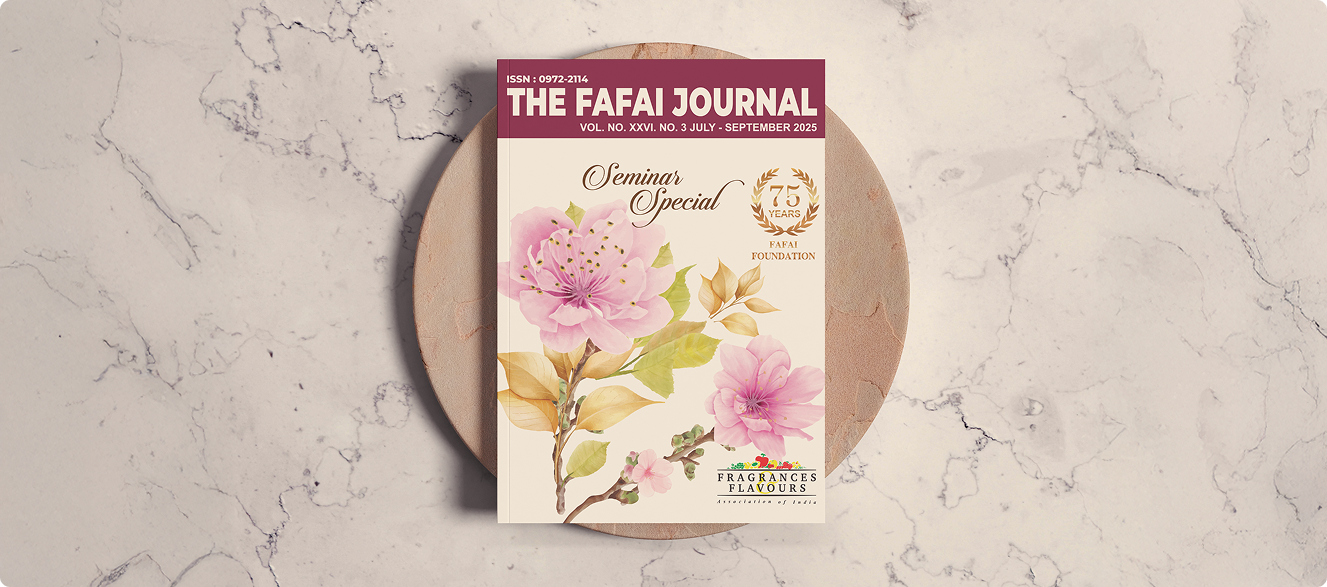
Stay Ahead with FAFAI Journal
Subscribe to the FAFAI Journal for more such insightful articles covering the latest developments, emerging trends, groundbreaking research, and expert perspectives from leaders across the fragrance and flavour industry. Join a growing community of professionals working towards positioning India as a global benchmark in fragrance and perfumery excellence.
Stay informed, stay inspired, and contribute to India’s rise as a global benchmark in fragrance and perfumery excellence. Subscribe to the FAFAI Journal to access the latest industry developments, research, market trends, and expert knowledge shared by fragrance leaders.
To know more about subscriptions, write to us at mail@fafai.in.